 OUR BUSINESS
Products
Audit Services
Consulting Services
AUDIT SERVICESEarthing Health Assessment
Instrumentation Earthing System
Lightning Protection Audit
Power Quality Studies
Electrical & Fire Safety
CONSULTING SERVICESOUR BUSINESSAUDIT SERVICESCONSULTING SERVICESAs a pioneer in Earthing integrity testing services, we at JEF have over two decades of experience covering 300,000 riser connections spread across 18 countries, 400 substations ranging from 33kV to 765kV process plants and other critical installations. With several patents in this field, our level of expertise is unmatched even as we keep innovating further.
Most earthing systems are designed carefully, installed correctly, and then largely forgotten. They are underground, inaccessible, and out of sight. Periodic maintenance typically consists of measuring the resistance of the earth electrode — a number that may show no cause for alarm even when the earthing system integrity is significantly compromised.
Standard practice is to measure the resistance of the earth electrode and compare it against the design value. If within acceptable limits, the earthing system is considered satisfactory and safe.
This has a significant limitation addressed in both IEEE Std 80 and IEEE Std 81. A ground grid has multiple parallel current paths. A corroded joint, disconnected riser, or isolated grid section creates a local deficiency without changing the overall measured resistance — the healthy parallel paths continue to return a satisfactory reading. Some or many equipment may have no effective earthing connection at all, yet the resistance test gives no indication regarding the defects.
A facility can show a satisfactory earth resistance measurement while specific switchgear panels, transformer neutrals, or plant structures have open or high-resistance connections to the grid that would prevent the protection system from operating timely during a fault.
JEF’s Earthing Health Assessment is designed specifically to address these gaps.
As a pioneer in Earthing integrity testing services, we at JEF have over two decades of experience covering 300,000 riser connections
spread across 18 countries, 400 substations ranging from 33kV to 765kV process plants and other critical installations. With several patents
in this field, our level of expertise is unmatched even as we keep innovating further.
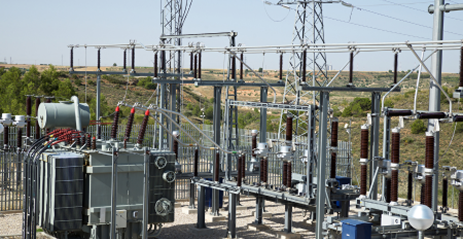
Each test result is interpreted in the context of the complete earthing system — soil conditions, grid geometry, fault current levels, and protection settings — to produce directly actionable findings
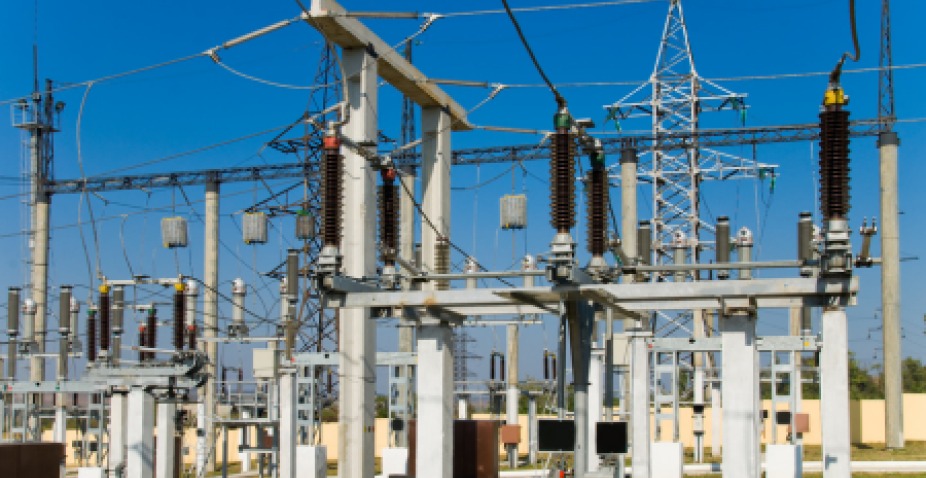
Designed for live systems, eliminating the production impact that would make comprehensive testing impractical for most facilities.
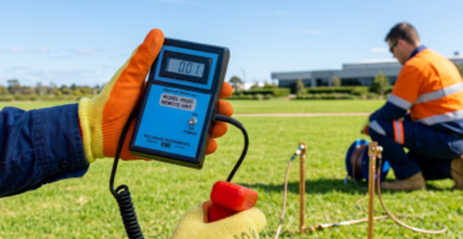
JEF’s methodology pinpoints the specific location of each deficiency — open riser, isolated grid section, or corroded connection — enabling targeted corrective action.
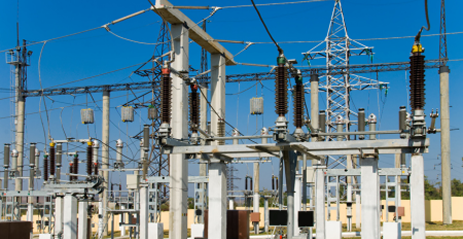
Computer modelling using CDEGS software produces quantitative assessments of GPR, touch potential distribution, and step potential profiles across the site.
Each test result is interpreted in the context of the complete earthing system — soil conditions, grid geometry, fault current levels, and protection settings — to produce directly actionable findings
Designed for live systems, eliminating the production impact that would make comprehensive testing impractical for most facilities.
JEF’s methodology pinpoints the specific location of each deficiency — open riser, isolated grid section, or corroded connection — enabling targeted corrective action.
Computer modelling using CDEGS software produces quantitative assessments of GPR, touch potential distribution, and step potential profiles across the site.
Detailed engineering report with all measurement results, test locations, and test conditions.
Site photographs documenting the installation condition and all visible deficiencies identified.
List of all identified anomalies and defects, with specific locations and BOM required for correction.
Assessment of the criticality of each deficiency on protection system performance and personnel safety.
Recommendations for corrective action, prioritised by safety impact.
Earth grid simulation outputs where modelling was performed — GPR, touch potential distribution, and step potential profile.
Confirmation of compliance or non-compliance with applicable standards and CEA Regulations, 2023.

Explore our comprehensive registration guide for detailed insights.
SELECT TO DOWNLOAD
When you visit any website, it may store or retrieve information on your browser, mostly in the form of cookies. This information might be about you, your preferences or your device and is mostly used to make the site work as you expect it to.
Because we respect your right to privacy, you can choose not to allow some types of cookies. Click on the different category headings to find out more and change our default settings. However, blocking some types of cookies may impact your experience of the site.
More information