

EMI BETWEEN OVERHEAD POWER LINES & BURIED PIPELINES
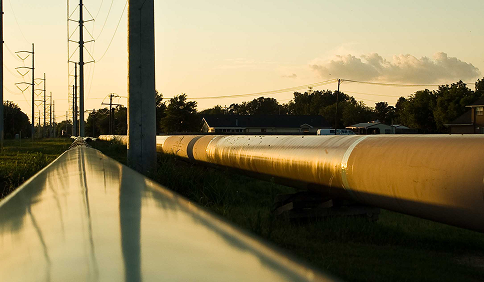
The analysis of electromagnetic interference between high voltage overhead power transmission lines and nearby gas or oil pipelines has been a topic of growing interest for many years. When pipelines are located in a shared row with power lines, the pipeline can suffer high induced voltages and currents due to AC interference. The induced voltage can be dangerous for an operator to touch the pipeline, and pipe corrosion can result from AC discharge.
The AC interference is due to three main phenomena: Inductive, Conductive, and Capacitive coupling.
- Inductive Coupling: Voltages are induced in nearby metallic conductors by magnetic coupling with high voltage lines, resulting in currents flowing in a conducting pipeline and existence of voltages between it and the surrounding soil.
- Conductive Coupling: When a ground fault occurs in HV Power Lines, the current flowing through the grounding grid produces a potential rise on both the grounding grid and the neighboring soil. If the pipeline goes through the "zone of influence" of this potential rise, a high difference in electrical potential can appear across the coating of the pipeline.
- Capacitive Coupling: Affects only aerial pipelines situated in the proximity of HV Power Lines. For underground pipelines, the effect of capacitive coupling may not be considered because of the screening effect of earth against electric fields.
Pipelines can suffer the potential loss of metal and resultant risk of leakage of product due to AC corrosion. It is very important to understand the interaction between the transmission lines (power system), pipeline and the cathodic protection systems to assess the impact of AC Interference.
A comprehensive study of the system through field data collection and software modeling can provide solutions that can help limit AC corrosion and achieve safety. The study will take into account various factors including soil structure, transmission line parameters, pipeline data and existing cathodic protection measures to assess problem areas and design cost-effective mitigation solutions.
Please let us know if you need further assistance or have any requirements: [email protected]


