

SOURCES OF SURGES IN INDUSTRIAL AND COMMERCIAL POWER SYSTEMS
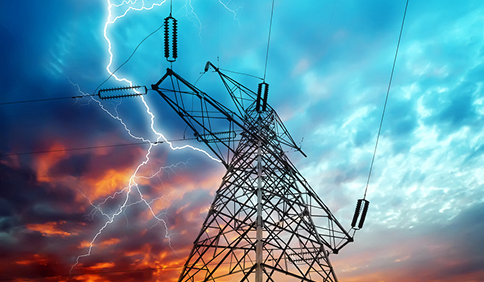
The AC power supply is a common source of surges; unfortunately, the human eye cannot detect it. It is especially harmful in India, where overhead lines provide the majority of our power. As per IS/IEC 62305, Source S3 is Flash to the service line which has got all the loss, risk, and damages as in the case of flashes to the structure (Source S1). Any cable entering electronic equipment is also an easy path for the lightning current to enter and cause unexpected & untold damage.
Surge or lightning protection devices safeguard electrical equipment from damage caused by over-voltage transient occurrences by blocking or diverting surge current to the ground rather than flowing through it.
Surges Due to Mother Nature:
- Predominant route is the lightning current through overhead power line, which will also induce currents into signal cables entering the building.
- Opposite is also true — lightning current through signal cables can also induce current in power line.
Manufactured Surges:
- Heavy current load switching by the power board can create severe surges on the supply due to inductive effects or the transformer's inadequate regulation.
- Lift motors and other large electrical machines can generate significant surges, especially when the motor is worn.
- Capacitor bank switching.
- Resonating circuits associated with switching (e.g., Thyristors).
- Faults such as short circuit and arcs to the earth.
- In residences, operating refrigerators on or off through thermostats can create problems in sensitive electronic equipment like music systems and computers.
For more information on this subject, IEC 61000 – EMC – Part 4 – Testing & measurement techniques – Electrical Fast Transient (EFT)/burst immunity test shall be referred apart from IS/IEC 62305 – Protection against Lightning, Parts 1 to 4.
Please let us know if you need further assistance or have any requirements: [email protected]


